Web Design vs Web Development: Which One Do You Need to Hire?

When you decide to build or rebuild a company website, you will hear two terms used constantly: web design and web development. Many people use them interchangeably, but they describe two separate disciplines.
Hiring the wrong specialist can cause frustration and wasted budget. If you hire a pure designer to fix broken forms or slow page loads, they will struggle. If you hire a back-end developer to revamp your branding and user journey, you will likely end up with a fast website that looks dated and fails to convert visitors.
Understanding what each role covers helps you hire the right partner, budget accurately, and manage your project smoothly.
What is web design?
Web design focuses on the visual appearance, layout, usability, and brand perception of a website. It is about how the website looks and how a person experiences moving through it.
A web designer solves problems like visual hierarchy, typography, brand consistency, and user flow. They spend their time inside tools like Figma, Sketch, or Adobe XD rather than writing code.
Good web design covers several core areas:
- User Interface (UI) design: The visual elements visitors interact with, such as buttons, colour palettes, typography, imagery, and layout grids.
- User Experience (UX) design: The structure and customer journey. This includes site architecture, wireframes, user testing, and ensuring a visitor can find information easily without getting confused.
- Conversion rate optimisation: Positioning calls to action, testimonials, and value propositions where visitors naturally look. If you want to dive deeper into layout choices that guide buyers, read our guide on website design principles that turn visitors into customers.
In short, a designer produces a blueprint and visual interactive mockups. They deliver the visual standard of what the site ought to be before any code is written.
What is web development?
Web development is the technical engineering that takes those visual designs and turns them into a living, functional website. Developers write code to bring static screens to life, ensure the site loads quickly, and connect your pages to databases and software tools.
Web development is broadly split into two parts:
- Front-end development: Translating Figma mockups into clean HTML, CSS, and JavaScript. The front-end developer ensures the layout adapts smoothly across mobile phones, tablets, and desktop screens.
- Back-end development: Managing databases, user authentication, application logic, and third-party integrations such as payment gateways, CRMs, or inventory tools.
A developer also manages technical performance, server configuration, core web vitals, and technical search engine optimisation.
At Tech Creeds, our development team often works directly from structured design files. You can see how this bridge works in practice in our breakdown of how to speed up web design handoff using Figma design systems.
A real-world scenario: The recruitment firm redesign
To see how these two disciplines interact, consider a mid-sized recruitment agency looking to overhaul its online presence.
The firm had an outdated site built five years ago. It had two big problems. First, corporate clients found the pages cluttered, confusing, and unconvincing. Second, job candidates struggled to search job listings, and submitted CVs frequently failed to reach the internal recruitment database.
If the owners only hired a freelance web designer: The designer could create stunning mockups in Figma, craft a clean colour system, and design an intuitive job search filter. But when handed the project, the designer cannot write the custom database queries or API webhooks required to push candidate data into the company's Bullhorn CRM. The project stalls right when it needs to go live.
If the owners only hired a back-end developer: The developer could set up the custom post types, configure the database, and build reliable API endpoints. However, without a dedicated design phase, the final pages would feel clunky, the typography would be hard to read on mobile devices, and the enquiry form might sit below three screens of plain text. Candidates would leave before applying.
The agency needed both disciplines. The designer solved the UX flow, candidate search layout, and corporate branding. The developer then built those templates, connected the search filters to the live database, and ensured the site loaded in under 1.5 seconds.
Which specialist should you hire?
Your hiring decision depends on where your current website is falling short.
Hire a web designer when:
- Your site feels outdated compared to your competitors, and you need a modern look.
- Visitors arrive on your pages but bounce quickly without browsing.
- You are launching a new brand identity, product line, or service offering.
- You need clear wireframes and user flow mapping before committing to custom engineering.
- You want to explore professional visual systems via our brand identity and UI/UX design services.
Hire a web developer when:
- Your current design is fine, but the website takes four seconds or longer to load.
- You want to integrate your forms with tools like HubSpot, Salesforce, or Stripe.
- You need custom functionality, such as client portals, dynamic calculators, or complex membership filters.
- Links, checkout paths, or interactive elements are broken and throwing errors.
Hire an integrated agency when:
- You are building a new website from scratch or undertaking a complete redesign.
- You need the creative team and technical team to collaborate under one roof, preventing communication gaps and unexpected scope creep. You can review examples of this end-to-end approach across our portfolio of client case studies.
How the two roles collaborate
The best websites are built when design and development happen in dialogue rather than isolation. When a designer understands technical constraints, they do not design elements that slow down the site. When a developer understands design principles, they do not compromise spacing, typography, or interaction details during build time.
Understanding this division of labour protects your budget. It allows you to write clear project briefs, ask the right screening questions, and hire the exact expertise your business needs today.
Frequently asked questions
Can one person do both web design and web development?
Yes, some professionals work as "full-stack" designers or developers who can design in Figma and code in WordPress or Webflow. While this can work well for simple brochure sites, larger and more complex projects usually benefit from dedicated specialists who focus deeply on their respective crafts.
Is WordPress web design or web development?
WordPress involves both. Setting up themes, choosing fonts, and structuring layouts is web design work. Writing custom plugins, creating custom PHP templates, configuring database queries, and managing server performance is web development.
How do I know if my website problem is design or technical?
Look at your metrics. If you have plenty of traffic but low conversion rates, confusing navigation, or high bounce rates, you likely have a design and user experience issue. If your pages load slowly, forms throw error messages, or third-party tools fail to sync data, you have a development issue.
Do I need to finish the design completely before development starts?
In most professional workflows, yes. Finalising wireframes and visual designs first ensures all stakeholders agree on the look and feel before any code is written. Making layout revisions in a design tool takes minutes, whereas rewriting code during development takes hours and adds unnecessary cost.
If you are planning a website project and are unsure whether you need design support, development muscle, or both, book a free discovery call. You will speak directly with one of our founders, Maisam or Jawwad, to review your goals and find the most cost-effective path forward.
More from the blog
 Web Design
Website Design Principles That Turn Visitors into Customers
Learn how to structure page layouts, place calls to action, and eliminate friction to turn more website visitors into qualified…
 Web Design
Webflow CMS Collections vs WordPress Custom Fields for UK Agencies
Compare Webflow CMS Collections and WordPress custom fields for UK marketing sites. Learn which scales better for speed, design control,…
 Web Design
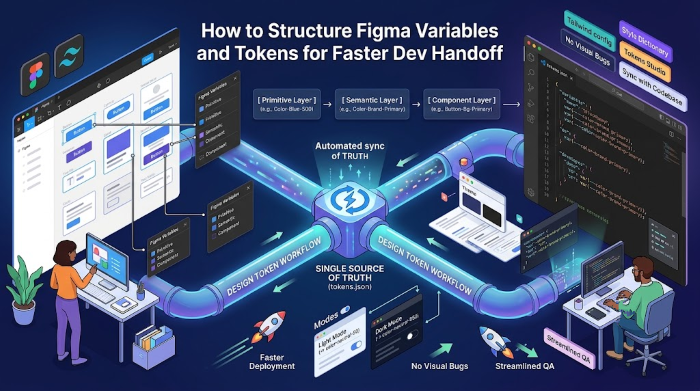
How to Structure Figma Variables and Tokens for Faster Dev Handoff
Learn how to set up Figma variables and design tokens so your design and development teams stay aligned and ship…