How Long Does It Take to Build a Custom Website? Realistic Timelines
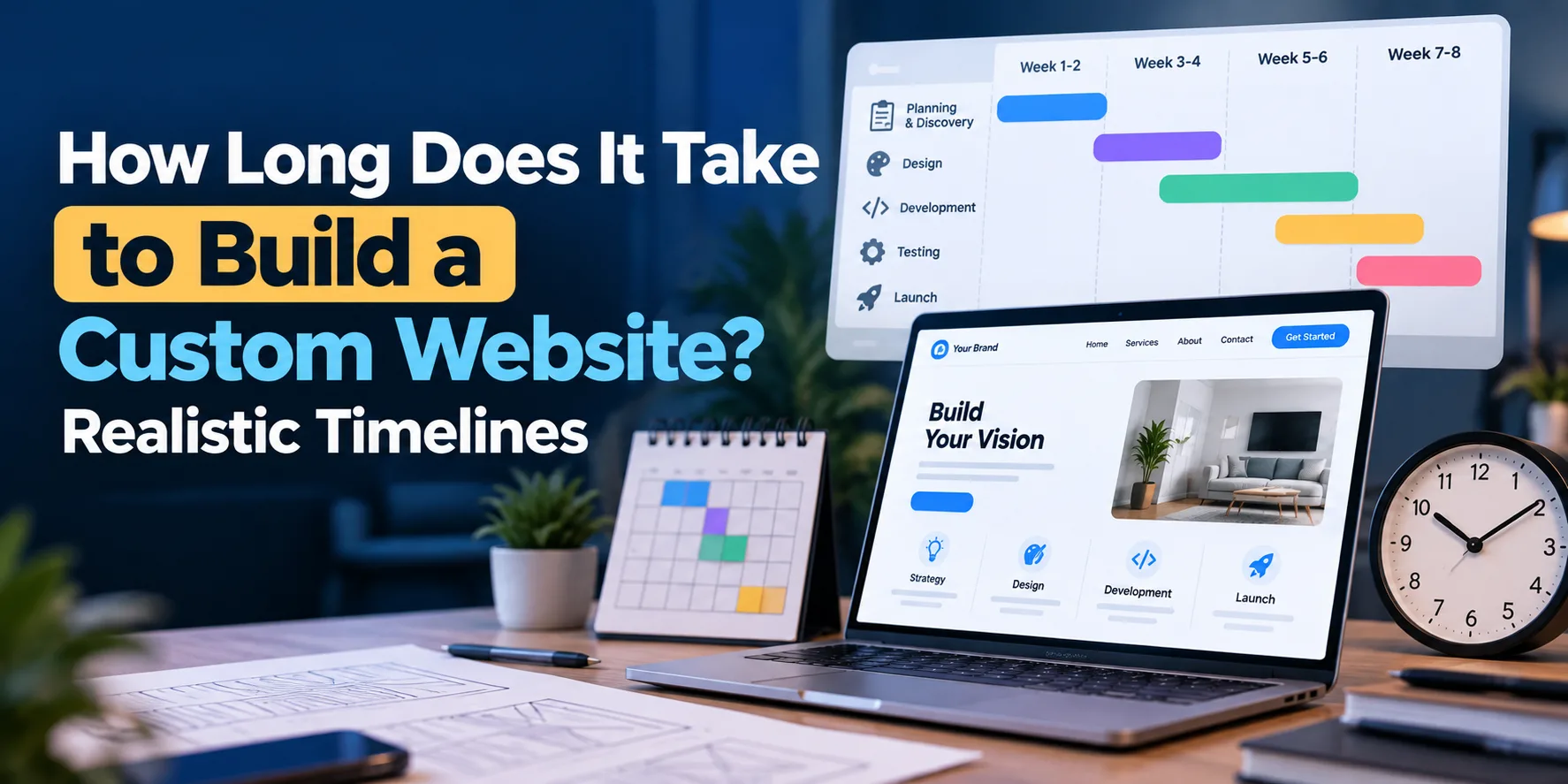
A fully custom website usually takes between 6 and 16 weeks from kickoff to launch.
The exact timeline depends on the number of unique page layouts, the complexity of third-party integrations, and how quickly your internal team can supply copy and approve design proofs. A simple five-page brochure site built from scratch can be ready in 4 to 6 weeks, whereas an enterprise web application or complex e-commerce platform can easily take 4 to 6 months.
Here is a realistic look at how long custom website projects take by scope, what happens during each phase, and the operational bottlenecks that frequently push delivery dates back.
Realistic timelines by project scope
No two custom builds are identical, but most projects fall into one of three distinct categories.
1. Simple bespoke brochure site (4 to 8 weeks)
This scope suits professional service firms, consultants, and local businesses that need a distinct, high-performing online presence.
- Page count: 5 to 10 unique pages.
- Functionality: Contact forms, blog or news section, basic CRM connection (such as HubSpot or Zoho), and clean, responsive layouts.
- Typical schedule: 2 weeks for planning and wireframes, 2 weeks for visual design, 2 weeks for coding and testing.
2. Mid-sized corporate or lead-generation site (8 to 14 weeks)
This is the standard scope for growing B2B businesses, SaaS marketing sites, and companies requiring tailored content management workflows.
- Page count: 15 to 30 pages, including filtered resource hubs, case study directories, and career portals.
- Functionality: Dynamic CMS collections, multi-step lead capture funnels, custom animations, CRM integrations, and interactive calculators.
- Typical schedule: 3 weeks for strategy and architecture, 3 to 4 weeks for UI design, 4 to 5 weeks for front-end and back-end development, and 2 weeks for content migration, QA, and launch preparation.
3. Complex custom web platforms and e-commerce (12 to 20+ weeks)
Projects in this tier feature bespoke user dashboards, complex product configurators, or deep integration with enterprise inventory systems.
- Page count: 30+ pages, dynamic templates, or authenticated member areas.
- Functionality: Custom checkout flows, multi-currency handling, role-based user permissions, or bespoke web applications.
- Typical schedule: 4 weeks for technical scoping, 4 to 6 weeks for prototyping, 6 to 10 weeks for full-stack engineering, and 3 weeks for load testing, security auditing, and deployment.
If you are currently evaluating delivery partners for a project of this scale, make sure you review our guide on questions to ask a web developer before you hire them to ensure their proposed schedule is grounded in reality.
The stages of a custom web development project
A disciplined build process protects the project timeline by ensuring sign-off happens sequentially rather than all at once at the very end. At Tech Creeds, we break down custom web development services into four structured milestones:
Discovery & Wireframing ──> UI Design ──> Custom Coding & CMS ──> QA & Launch
     (Weeks 1-3)           (Weeks 4-6)        (Weeks 7-10)          (Weeks 11-12)
Discovery, architecture, and wireframing (Weeks 1 to 3)
Before opening visual design software, the technical team maps user journeys, sitemaps, and low-fidelity wireframes. This stage establishes which templates need to be designed from scratch and what data structures the content management system will need.
UI design and interactive prototyping (Weeks 3 to 6)
Visual designers build the high-fidelity desktop and mobile layouts in Figma. They establish typography, component libraries, and interactive states. Skipping wireframes and rushing into UI design usually adds weeks to the schedule later, because structural changes become far more expensive once colours and styling are applied.
Front-end and back-end development (Weeks 6 to 10)
Engineers convert static designs into clean, accessible, semantic code. They set up the CMS, configure custom fields, connect APIs, and implement on-page technical SEO hygiene.
Content population, testing, and deployment (Weeks 10 to 12)
The final stage covers cross-browser testing, mobile responsiveness checks, load-speed optimization, redirect mapping, and DNS propagation.
A real-world scenario: an 18-page B2B website
Consider a real scenario involving an 18-page site for a commercial property consultancy. The initial target was a 10-week delivery schedule:
- Planned timeline: 2 weeks discovery, 3 weeks design, 3 weeks development, 2 weeks review and launch.
- The complication: At week 5, the client realized their internal team had only written copy for 4 of the 18 pages. Because the layout depended on detailed property listings and case studies, development could not proceed on those templates without real data.
- The adjustment: The team paused custom coding for the missing templates and built a shared Google Doc content inventory. Staging content was completed over a 2-week sprint.
- The outcome: The site launched at week 12 rather than week 10. The 2-week delay was contained only because the core layout architecture was already finalized, avoiding any redesign work.
You can see examples of how these completed layouts function across our recent work in our portfolio.
The 4 biggest bottlenecks that cause launch delays
When projects miss their deadlines, poor project management or unexpected bottlenecks are usually to blame. Here are the four most common culprits:
- Content and copy delays: This is responsible for roughly 70% of all website delays. Writing quality website copy takes significantly longer than most business leaders anticipate.
- Approval committee paralysis: When five different internal stakeholders need to sign off on a design, review cycles stretch from two days to two weeks. Designating a single internal project owner keeps the timeline intact.
- Scope creep: Requesting new page templates or additional features mid-build forces developers to refactor database schemas and layouts. Save new feature ideas for a phase-two release.
- Third-party assets and access: Delays in handing over domain registrar logins, analytics tracking IDs, or payment gateway API keys can stall a deployment right at the finish line.
Custom build vs template: weighing the trade-offs
If speed to market is your single highest priority, using an off-the-shelf commercial theme can get a simple site live in 2 to 3 weeks. However, templates come with distinct trade-offs:
- Performance: Pre-built themes often carry bloat, unneeded scripts, and heavy styling that degrade loading speeds.
- Scalability: Modifying a template beyond its intended design often results in brittle CSS workarounds and broken layouts.
- Brand distinctiveness: A bespoke site gives you exact control over conversion funnels and brand positioning without being boxed into a rigid grid.
If you are looking at WordPress specifically, choosing an experienced agency makes a major difference in whether your bespoke build stays on schedule. Our overview of the best custom WordPress development agency in London 2026 explains how modern development setups streamline the handover process.
Frequently asked questions
Can a custom website be built in less than four weeks?
Yes, but only under strict constraints. A 3 to 4-week delivery requires an existing, polished brand identity, ready-to-publish copywriting, a small page count (under 8 pages), and an immediate approval turnaround from your decision-makers.
When does the project timeline officially begin?
The delivery timeline starts during the kickoff meeting, after the contract is signed, the initial deposit is settled, and your team has completed the onboarding brief. Preparation time spent gathering internal assets beforehand does not count toward the active development sprint.
What should I prepare before hiring a development agency?
Prepare a sitemap of the pages you need, high-resolution brand assets, examples of websites whose layout or functionality you like, and a clear list of required software integrations such as your CRM, email marketing tools, or scheduling software.
How does scope creep affect my launch date?
Adding even a single complex feature mid-build, such as an interactive pricing calculator or custom filtering system, requires new wireframing, layout design, responsive adjustments, and testing. A feature that takes three days to code can easily push your overall launch date back by two weeks.
If you are planning an upcoming redesign and want a clear, dependable delivery schedule, book a free discovery call with us. You will speak directly with one of our technical founders, Maisam or Jawwad, who will review your functional requirements and map out a realistic timeline for your launch.
More from the blog
 Development
Questions to Ask a Web Developer Before You Hire Them
Avoid unexpected costs, project delays and vendor lock-in. Here are the essential questions to ask a web developer about ownership,…
 Development
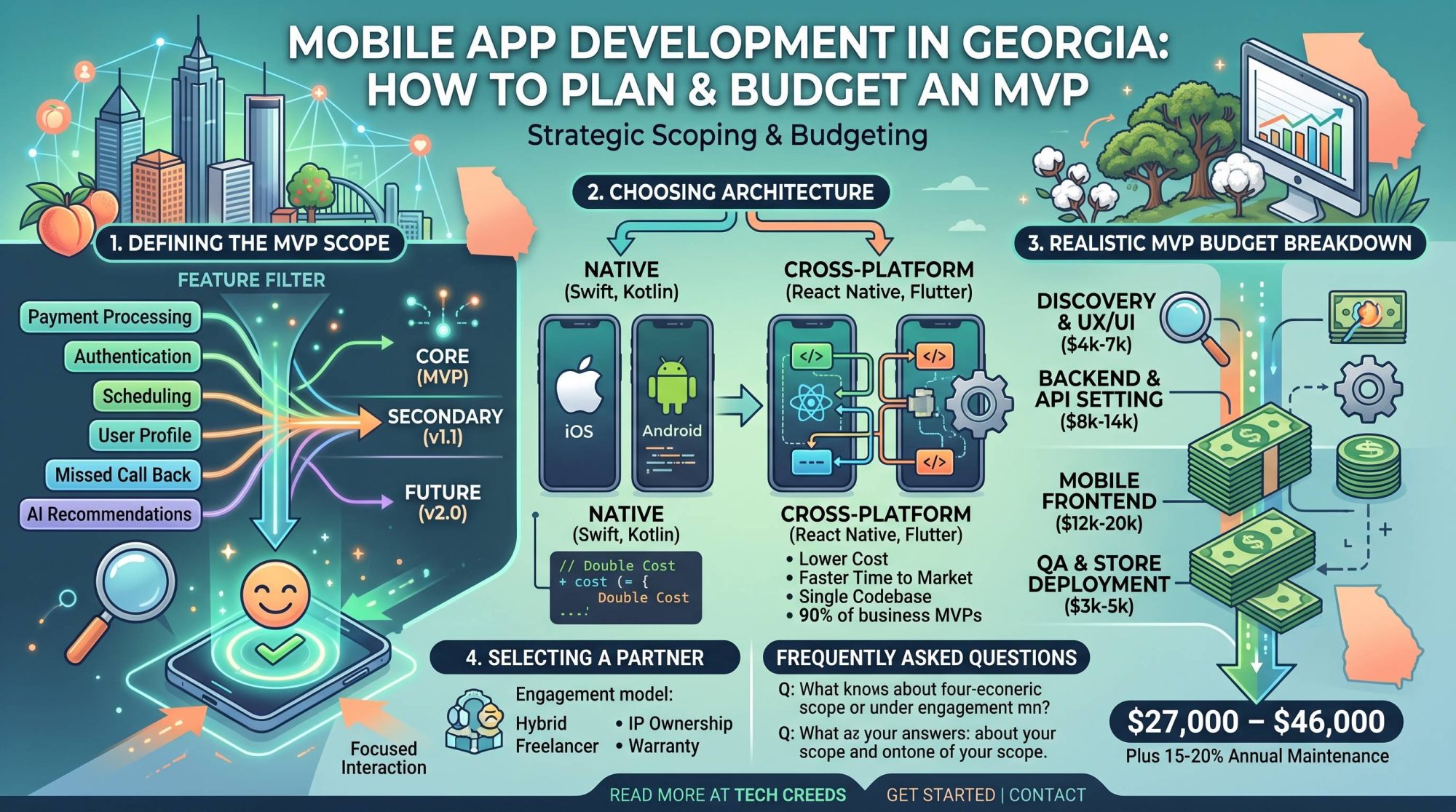
Mobile App Development in Georgia: How to Plan and Budget an MVP
A practical guide for Georgia businesses planning their first mobile app. Learn how to scope an MVP, budget realistically, and…
 Development
Custom Shopify Sections vs Apps: Which Is Better for Speed 2026
Compare custom Shopify sections and apps to reduce app bloat, speed up your store, and protect your conversion rate in…